pixel
Cultural Currents
Three Jungians on Psychedelics: Is Tripping a Valid Path of Self-Discovery?

Three Jungians on Psychedelics: Is Tripping a Valid Path of Self-Discovery?

Psychedelics may help us access deep layers of the unconscious, revealing aspects of psyche that are often inaccessible through traditional psychoanalytic methods alone. Jungian analysis, with its focus on archetypes and the collective unconscious, provides a framework for interpreting and integrating the complex, symbolic experiences often encountered in psychedelic states. The combination of psychedelics and analysis could facilitate a more profound and holistic healing process, addressing not only individual psychological issues but also connecting with broader, universal aspects of human experience. This integrated approach could accelerate the therapeutic process, allowing for quicker breakthroughs and more profound insights than can be achieved through either method independently.

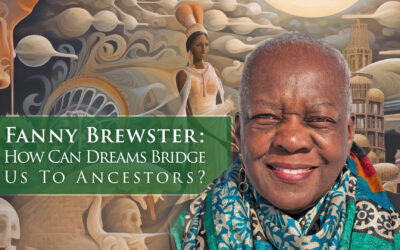
Fanny Brewster: How can dreams bridge us to ancestors?

Fanny Brewster: How can dreams bridge us to ancestors?

Jung’s concept of the collective unconscious emphasized the universal psychological substrate common to all humans. While he acknowledged the effects of the cultural unconscious, his work, at times, fell into the trap of perpetuating oversimplified and racially prejudiced stereotypes. Jung’s writings that refer to Africanist peoples, in particular, suffer from offensive assumptions.

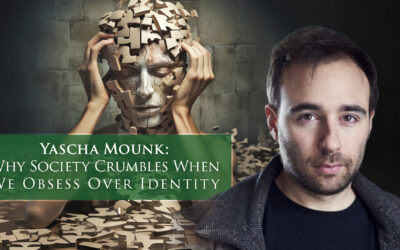
Yascha Mounk: Why Society Crumbles When We Obsess Over Identity

Yascha Mounk: Why Society Crumbles When We Obsess Over Identity

In an era where identity politics reshapes global narratives, the urgent need to balance diversity with universal human values becomes clear. The melding of postmodernism, postcolonialism, and critical race theory raises a provocative question: Can embracing universal principles truly bridge our deepening societal divides? This challenge calls for a bold reimagining of our approach to social harmony and equality, urging a critical reassessment of how we navigate identity and inclusivity in a complex, interconnected world.

Aaron Balick – Why does social media weaponize our reactions?

Aaron Balick – Why does social media weaponize our reactions?

Reactivity often usurps reflective response, with social media fueling instantaneous, reflexive reactions. This hampers thoughtful decision-making and obscures the other party’s perspective, trapping discourse within a reactive cycle. Emotional reactivity, a necessary short-term survival mechanism, can become a long-term maladaptive response, leading to perpetual defense rather than constructive dialogue. Such sustained reactivity is evident in the widespread use of social media, where the nuanced, truth-seeking aspects of communication are eclipsed by the platform’s inherent design that favors sensationalism and emotional contagion. This environment diminishes the capacity for mutual understanding and comprehensive evaluation of complex social issues, fostering a climate where binary thinking and polarization thrive.

FAME: Why Do We Create Icons Only to Destroy Them?

FAME: Why Do We Create Icons Only to Destroy Them?

Fame tempts the ego to claim what does not belong to it, and the person may become identified with his or her role, especially as others have an urge to find a hero, wise man, leader, or transcendent figure. Jung wrote about the mana personality—a larger-than-life person with charismatic power and energy. Magicians and priests, infused with special knowledge and god-like capabilities, are emblematic of mana personalities. Followers are then imbued with the mana person’s special qualities, as we see in audience reactions at concerts or rallies.

REUNIONS: Is there value in remembering our younger selves?

REUNIONS: Is there value in remembering our younger selves?

We organize reunions because we yearn to reconnect with old friends, recall shared experiences, and reignite a sense of community. We all need meaningful social contact and enjoy nostalgia. While coming together can feel alluring, actually attending the event may evoke a spectrum of ambivalent feelings. We’re likely to feel judged for our achievements, appearance, or socioeconomic status, especially compared to our peers. Transitioning into adulthood is often tumultuous, marked by intense negative experiences, and revisiting those periods can be daunting. Attending reunions can inadvertently reactivate traumatic memories, making the decision to participate a delicate one for many of us. Seeing a former bully or revisiting a dorm can bring back the anxiety, fear, loneliness, or sadness of those formative years. We might even find ourselves sweating or feeling trapped. Recognizing and validating our fears is crucial.

THE BARBIE MOVIE: Can it Dismantle an American Myth?

THE BARBIE MOVIE: Can it Dismantle an American Myth?

In 1959, the Barbie doll hit the market and created a stir. American mothers objected to her sensuous form, so Mattel marketed it directly to children, a tactic never used before, and it worked. The maternal archetype of Hera, sentinel of the social order, goddess of childbirth, and protectress of the home, was supplanted. Aphrodite, the captivating goddess exuding an aura of beauty, desirability, and persuasive allure, had arrived.

FRIEND or FOE: The AI Debate with Michael L. Littman, PhD

FRIEND or FOE: The AI Debate with Michael L. Littman, PhD

The uses and abuses of ChatGBT artificial intelligence language model have taken the collective imagination by storm. Apocalyptic predictions of the singularity, when technology becomes uncontrollable and irreversible, frighten us as we imagine a future where human intelligence is irrelevant. Prof. Michael Littman joins us to contextualize the advancement of artificial intelligence and debunk the paranoid rhetoric littering the public discourse.

Meeting Shadow on the Spiritual Path with Connie Zweig

Meeting Shadow on the Spiritual Path with Connie Zweig

Award-winning author, depth psychotherapist, and guide Connie Zweig shows us encountering darkness is a necessary part of our spiritual journey. In the first half of life, we disown aspects of ourselves to fit in and navigate our world more smoothly. Over time we realize all aspects of ourselves must be recalled and befriended. Integration of these shadow aspects lays the foundation for spiritual awakening.

Reviving Tolerance in Cancel Culture

Reviving Tolerance in Cancel Culture

In a world reduced to digital exchanges and swift judgments, reviving tolerance has become vital. Toleration comes from the ancient Proto-Indo-European root meaning “to carry,” a capacity collapsing in current culture. We stumble into extremes when we lose the strength to carry the tension of opposite ideas and feelings. Exaggerations of discomfort and hyperbolic comparisons pepper media messages and inflame the underinformed public–the collective psyche lists from topic to topic. In the vertigo of confusion, we make terrible decisions and strike out blindly.