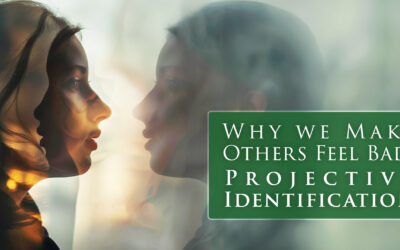
Projective identification, first highlighted by Melanie Klein through observations of infant-mother interactions, is a cornerstone of psychoanalytic theory. It describes the process where an individual unconsciously projects disowned feelings, desires, or self-aspects onto another, manipulating the relational context to evoke these projected feelings or behaviors in the other, thus creating a validating feedback loop.
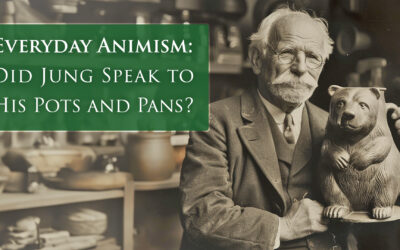
Everyday Animism: Did Jung speak to his pots and pans?
Apr 1, 2024
Jung held a fascinating belief in the soulful essence of inanimate objects. He engaged in daily greetings with his kitchenware at Bollingen Tower, expressing a unique form of animism that extended deeply into his personal and professional life. His collection of beer steins, each with its name, served not only as vessels for drink but as partners in dialogue, reflecting his practice of active imagination. This relationship with objects underscores Jung’s broader theories on the collective unconscious and synchronicity, suggesting that everything is interconnected and ensouled. His approach, echoing through the practices of figures like Marie Kondo, invites us to reconsider our relationships with the material world, hinting at a deeper, more mystical interaction with the everyday items that populate our lives.
VULGARITY: What’s Its True Power?
Mar 28, 2024
Our collective fascination with vulgarity, obscenity, and profanity lies in the thrill of transgression and the need to articulate the unspoken aspects of human experience. As we navigate social acceptability, the vulgar mirrors our deepest shadow and wildest laughter, a space where sacred and profane dance in the liminal light of truth and rebellion. Engaging vulgarity challenges the rigid confines of propriety.
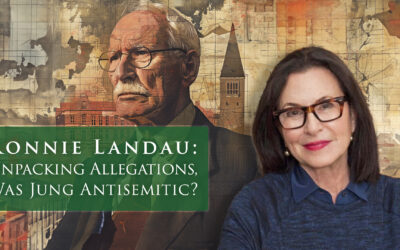
Ronnie Landau: Unpacking Allegations, Was Jung Antisemitic?
Mar 21, 2024
How do we interpret and evaluate C.G. Jung’s complex legacy in light of his interactions with Jewish individuals and the allegations of antisemitism, considering the nuanced historical context in which he lived and worked?”
THREE LITTLE PIGS SYNDROME: Is it better to flee or be the big bad Wolf?
Mar 14, 2024
The Three Little Pigs isn’t just a children’s tale; it’s a sharp commentary on resilience, preparation, and the strategic mindset required to navigate life’s challenges. This story strips back the layers of our decision-making processes, questioning whether we opt for quick fixes or invest in durable solutions.
The Psychology of Strife: What Lies Beneath Our Conflicts?
Mar 7, 2024
Conflict, both inner and outer, is a fundamental part of the human experience. We engage in conflicts externally with others and internally within ourselves, reflecting the complex nature of human relationships and the psyche. Our external conflicts often mirror internal struggles, serving as manifestations of unresolved or unacknowledged inner turmoil. Recognizing the projection of our inner conflicts onto external situations can lead to deeper self-awareness and understanding.
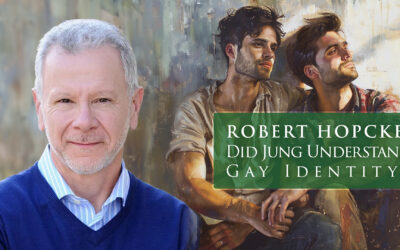
ROBERT HOPCKE: Did Jung understand gay identity?
Feb 29, 2024
Jungian psychology has a fresh take on integrating the shadow and the individuation process for LGBTQ+ folks. It encourages everyone to embrace their identity to achieve authenticity and wholeness. Reinterpreting Jung’s anima and animus concepts challenges the traditional binary notions of gender and sexuality, leading to a more fluid and inclusive understanding of these concepts. Dreams and fantasies can help people understand themselves better, showing them the archaic strata of desires, conflicts, and potentials hidden within their psyche. By engaging with the collective unconscious and its archetypes, LGBTQ+ individuals can better grasp themselves, fostering a sense of belonging and connection to the broader human experience. Jungian psychology recognizes and validates the complexity and diversity of human experiences, offering a framework that acknowledges and explores the many ways LGBTQ+ identities manifest and evolve.
THE VITAL SPARK: Reclaim Your Outlaw Energies and Find Your Feminine Fire
Feb 22, 2024
The Vital Spark represents the true essence of an individual’s authentic self. It encompasses the dynamic qualities that drive personal growth, creativity, and self-assertion. It embodies the deep-seated energies and potentials within us that, when acknowledged and embraced, lead to a life of fuller expression, resilience, and purpose.
UNREQUITED LOVE: Can Eros be revived?
Feb 15, 2024
The arrows of Eros strike our hearts, and we are filled with wild love. Psychotherapists call this limerence, that initial stage of love when all we ache for is found in one person. This projection can carry us into a new relationship with intrepid confidence for a time. If that love is unreturned, a second archetype, Anteros, is called forth to punish those who reject love. Armed with his lead club, he strikes the unloving and drives them to ruin.
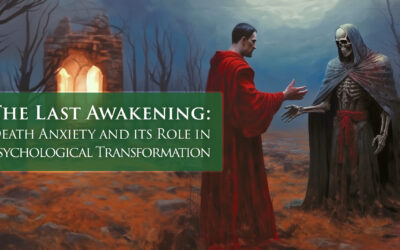
THE LAST AWAKENING: Death Anxiety and Its Role in Psychological Transformation
Feb 8, 2024
The death instinct (Thanatos) and the life instinct (Eros) symbolize the internal conflict between self-destructive urges and desires for creation, reflecting the psychological struggle with mortality. Religious traditions across the globe, from Buddhism’s focus on impermanence to Christianity’s belief in eternal life, offer diverse approaches to mitigating the fear of death, demonstrating the universal quest for peace in the face of mortality. The root of death anxiety in early childhood and the later development of defense mechanisms highlight a deep psychological battle against the awareness of death from a young age. Efforts to delay death through medical and lifestyle advancements juxtapose with spiritual teachings on accepting life’s transience, underscoring the human endeavor to navigate the reality of mortality. Psychoanalytic and existential treatments for thanatophobia emphasize the importance of acknowledging and integrating death into life for mental health.
SPEAKING TRUTH: Is it venom or a cure?
Feb 1, 2024
We examine the multifaceted nature of Truth and its impact on individuals and communities. We touche on the challenges of speaking Truth to power, the psychological dynamics of scapegoating and being disbelieved, the role of psychotherapy in uncovering and dealing with personal truths, and the significance of narrative and perception in shaping our understanding of reality.
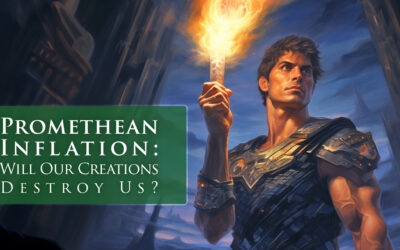
Promethean Inflation: Will Our Creations Destroy Us?
Jan 25, 2024
Prometheus embodies the eternal struggle between conscious and unconscious forces within psyche. His act of rebellion, like the ego’s desire for independence, results in detachment from its unconscious origins. Wild archetypal forces become impossible to contain and chain him to a rock where an eagle eats his liver each day. Prometheus’s liberation by Heracles represents the relativization of the estranged inflated ego with the unconscious, fostering growth and a humble attitude.