Over 25 Million Downloads
Our Podcast
Eavesdrop on Lisa, Deb, and Joseph as they engage in lively, sometimes irreverent conversations about a wide range of topics and dream analysis through the lens of depth psychology provided by Carl Jung.
Over 25 Million Downloads
Our Podcast
Top five listener favorites
Upcoming Price Increase
Thinking about joining Dream School?
The price of joining This Jungian Life Dream School will be increasing by around ten percent on March 1st, reflecting rising costs and the continued depth of what we offer inside the program. If you’ve been thinking about joining, this is a good moment to come on board at the current rate before the increase takes effect.

Spotify

Apple

YouTube

Tune In

Pandora

INFLUENCE: Connection or Contagion?
We have always been subject to the influence of others—it’s how we learn language, become socialized, cooperate and collaborate. It’s also how we exclude, denigrate, and assault others. Today, we are subject to unprecedented social influences. Multiplicities of media shape our ideas, identities, beliefs, and values–and foster connections and communities around the world. If tulip mania took hold in 17th century Holland – perhaps the original speculative bubble – today we have non-fungible tokens and cryptocurrencies. “Heretics” are now exiled via “cancel culture.” Cultural contagions and psychic epidemics are not new—they just come dressed in the flashy new garb of social media and telecommunication. Amid so many influences, it is newly necessary to engage in the discernment and differentiation crucial to individuation, the fulfillment of our innate potential. Consciousness cannot be held hostage to intellectual simplifications or emotional reactivity. Each of us can uphold social norms that rest on foundations of fact, reflection, and spaciousness.
SHADOWLAND: Prostitution– the story of Kay
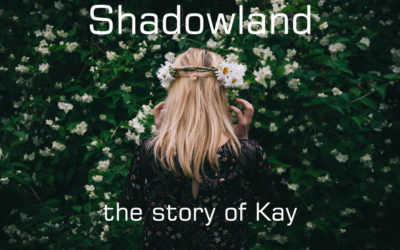
This is Shadowland a new podcast experience from This Jungian Life that explores the lives of people who work and take refuge in the hidden places of our culture. Lisa, Deb, and Joseph collaborate with songwriter Wells Hanley, creator of I Wrote This Song For You podcast, to bring insight, compassion, and understanding to the darker side of human experience.
Nietzsche wrote, “I am a forest, and a night of dark trees: but he who is not afraid of my darkness, will find banks full of roses under my cypresses.”
In that spirit, we meet Kay, a 21-year-old single mother who works throughout the American southwest as a self-described prostitute. We explore how she found her way to that life, what she aspires to, and how she holds the complicated tensions between herself, her clients, and the current culture.
SHADOWLAND: a new podcast experience – September 9 on TJL
On September 9th, This Jungian Life will launch a new podcast experience – SHADOWLAND. In this series, we meet soulfully with people who live and work in the hidden places of our culture. Walk with us and discover the voice of psyche on unexpected paths.

The Archetype of WAR
Recent events in Afghanistan have again put war at the forefront of collective consciousness. War’s destruction belongs to the mythic realm. Mars, the Roman god of war, was a primordial force whose altars were placed outside city gates. Although acknowledged, he was not accepted. His paramour, Venus, is warfare’s seductress, offering spectacle, pageantry, and glory.
THE MUSIC OF METAPHOR: Healing in Therapy & Life
To understand and engage another’s internal world requires language which speaks in harmony with the unconscious. Metaphor speaks beyond ego and traverses the realms between past and present, bodily sensation and feeling, conscious and unconscious. It infuses lived experience with connection and creates shared space for healing.

SPLITTING: Understanding What Divides Us
We seem hard-wired to split the world into polarities: right/wrong, either/or, victory/defeat, Democrat/Republican. Infants and toddlers have not yet achieved the developmental capacity for complexity; they are believed to split their feelings toward caretakers into “good” and “bad,” depending on whether their needs are being met in the moment.
The Wounded Healer
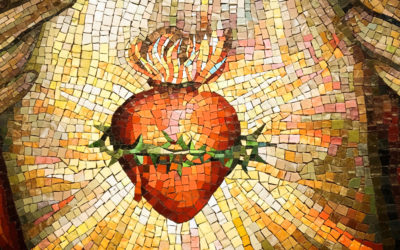
Jung’s dialectical process, we work together to discover “the curative powers in the patient’s own nature.” Just as every wounded patient has inner health, every healer has an inner wound. If consciously known and borne, the analyst’s wound serves the healing process.
Tarot, Divination & the Symbolic Life
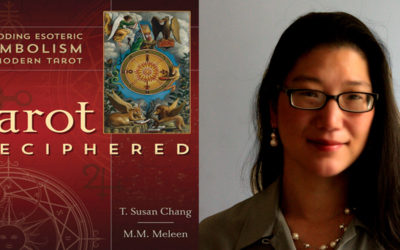
. The archetypal symbols in the tarot’s 78 card deck offer gateways to meaning and mystery. Jung says symbols act as transformers—life energy is converted from a lower to higher form by the amplification that consciousness provides. Tarot divination is intended to break from the mundane and court the numinous.
Time & Truth About Its Use
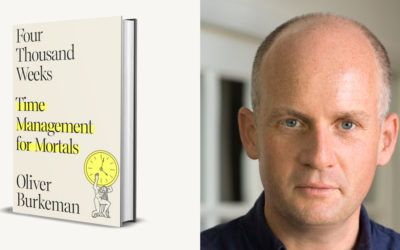
Guest Oliver Burkeman states in his new book, Four Thousand Weeks: Time Management for Mortals, that “outrageous brevity is life’s defining problem.” At age 80, you’ll have had a paltry 4,000 weeks. Such brevity is breathtaking, so we create defenses against the reality of finitude. We distract ourselves with the belief that fulfillment lies in the future, that plans and goals prove purpose, and that we can achieve almost any number of things by being more efficient/motivated/healthy—or just overall exceptional. Paradoxically, embracing life’s limitations can open us to what Jung called “a new attitude”—an inner pivot from the daily grind to seeing and seizing life’s possibilities. Time is not our adversary, the present is not hostage to the future, and we can choose to be alive while we’re alive.

The Cosmic Meaning of Consciousness
In Answer to Job, Jung states, “Whoever knows God has an effect on him.” If, as Jung claims, individual human consciousness affects God, what we are matters monumentally. When we serve our neuroses, the gulf between ego and Self widens. Pursuing individuation not only sets our personality in right order, it permits our personal experiences to enrich the collective unconscious.
ARCHETYPES
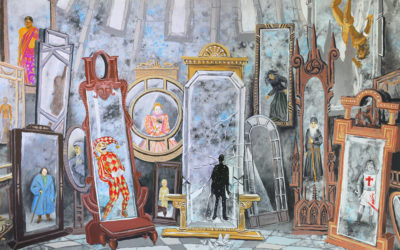
Jung was then able to posit archetypes as a predisposition to form representations of universal human experiences and mythological motifs, such as marriage, the hero’s journey, and death/rebirth. For Jung, archetypes are innate psychic organs that “have a positive, favourable (sic), bright side that points upwards [and] one that points downwards…”

PAYING ATTENTION: What Are You Spending It On?
We plainly pay attention, using the finite currency of time and energy issued in the 24-hour increments that add up to a life—well spent? We have choices and constraints about how we allocate our attention, and today’s world competes fiercely for it in unprecedented ways. No wonder, for power is the ability to command or hijack attention, even if it warps reality with untruths.