Over 25 Million Downloads
Our Podcast
Eavesdrop on Lisa, Deb, and Joseph as they engage in lively, sometimes irreverent conversations about a wide range of topics and dream analysis through the lens of depth psychology provided by Carl Jung.
Over 25 Million Downloads
Our Podcast
Top five listener favorites
Upcoming Price Increase
Thinking about joining Dream School?
The price of joining This Jungian Life Dream School will be increasing by around ten percent on March 1st, reflecting rising costs and the continued depth of what we offer inside the program. If you’ve been thinking about joining, this is a good moment to come on board at the current rate before the increase takes effect.

Spotify

Apple

YouTube

Tune In

Pandora

POISON: Toxic or Transformative?
Pharmakon, the ancient Greek word for drug, can mean both “remedy” and “poison.” There is a close connection between poison and cure. Poison is stealthy, and takes us by surprise, whether through an unseen snake’s venomous bite or a ripe apple’s alluring disguise. Psychological poison glides past our defenses, pervades our being, and wounds us where we are most vulnerable. We participate in our poisoning through our own unknowing, from toxic cognitions and rigid fixations to self-doubt and self-sabotage. Poison can transform us by stinging us into building the immunity of increased consciousness and insight. Reason and objectivity can act as antidotes, allowing old attitudes to dissolve and new awareness to arise. Whether a poison is injected or ingested, we can use it for cure.

HOMESICKNESS: Longing & Belonging
Homesickness asks that we bear leave-taking and loneliness in service to belonging to a wider world, building new relationships, and the eventual realization that the soul’s true home is a transcendent source of personal being.

VOCATION: Answering the Call
Vocation, once associated with serving God through service to others, is now most strongly associated with a career having personal worth. Vocation spans a range of needs and values: commitment to making ends meet, striving for material rewards and social status, or the more internal satisfaction of research, helping others, and artistic expression. Freud considered love and work the cornerstones of our humanness, and Jung said, “In the final analysis, we count for something only because of the essential we embody, and if we do not embody that, life is wasted.” A discernment process is essential to determining the difference between a true calling and ego ambitions, what we want versus what we can have, and distinguishing dream from dedication. Ultimately, however, vocation is a state of being—so perhaps we can invest the work we have with a sense of call.

THE PRODIGAL SON as Shadow, Ego & the Self
The allegorical tale of the Prodigal Son illustrates Jung’s basic understanding of the structure and development of the psyche.

SHADOWLAND: DETRANSITION – THE STORY OF BETH
Beth underwent gender transition from natal female to trans male and has since de-transitioned.

CAUSAL OR CREATIVE: Is History Destiny?
The Roman god Janus had two faces. They looked in opposite directions, representing dualities, especially beginnings and endings, past and future. Psychotherapy often begins by facing the past and understanding its influence on the present. Belief in the past as unalterably determinative, however, can imply that personal history is a single, all-powerful god—as if Janus fixed on yesterday. Jung took special interest in psyche’s purposive and creative energy—the face Janus turned toward the future. Incarnating our innate potential, which Jung termed the individuation process, is the process of engaging our capacity for growth and wholeness. Life’s road ahead has new possibilities, which is why we launch the new year in honor of Janus, for it is he who presides over all new beginnings.

THE GETHSEMANE ENCOUNTER
The Garden of Gethsemane is the place of life crisis; it permits no escape or compromise. There, we suffer the agony of choosing between personal will or willing submission to something greater.
MORAL INJURY: Violation of Meaning
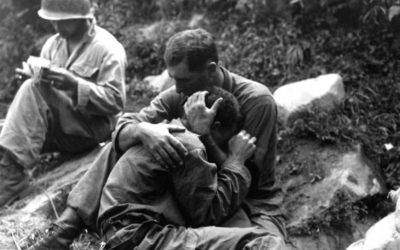
Moral injury violates our sense of justice, loyalty, and meaning—and creates a storm in the soul. Those who directly affect others’ lives are most at risk of suffering irreconcilable conflicts between behavior and belief: military, police, medical, educational, and other human service providers. The purported “cost of doing business” also calls us to confront institutional shadow–moral injury does not belong to the individual alone. The integrity of organizational and community values plays an important part in condoning morally distressing situations—and should play a role in healing the injured. Conflicts between actions and values are inevitable in life, and the core of being human is our unique capacity for choice. There is no way to escape shadow, and we are more than our mistakes. They are neither our totality nor our destiny.
Jung & Freud: From “Bro” to Broken
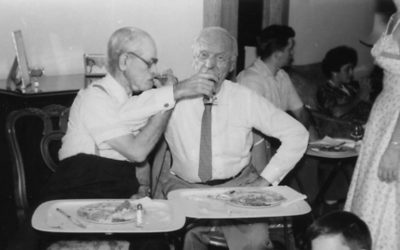
We welcome Jungian colleague, psychiatrist, and historian Dr. Bert Price, whose research in Vienna during a 2019 international conference led to the discovery of new facts regarding the famous friendship—and break-up—of Jung and Freud. Following lively correspondence, the two men met in Vienna and talked for 13 hours. They continued over the next three days, and after attending the Wednesday night meeting of Freud’s Vienna circle, took a “spirited” walk to a tattoo parlor, stirred by the mythic significance of “marking” their newfound bond.

HUNTING: An Archetypal Perspective
To hunt is to engage the opposites: the hunter must attune and align with nature in order to kill part of it

FAILURE as TEACHER
Failure is a call to self-confrontation, humility, and resilience. We can recognize the limits of our conscious attitude and our dependence on the unconscious. Failure can imbue us with a higher sense of purpose that is in service to a greater good, including our own.

CAUGHT IN THE CONFLICT: The Tension of Opposites
Holding the tension between opposites was one of Jung’s foundational precepts. Although contradictory views are often a better witness to truth than one-sided conviction, beliefs and decisions often serve to relieve ambiguity, anxiety, and threat. Jung says, “The ego keeps its integrity only if it does not identify with one of the opposites, and if it understands how to hold the balance between them.”