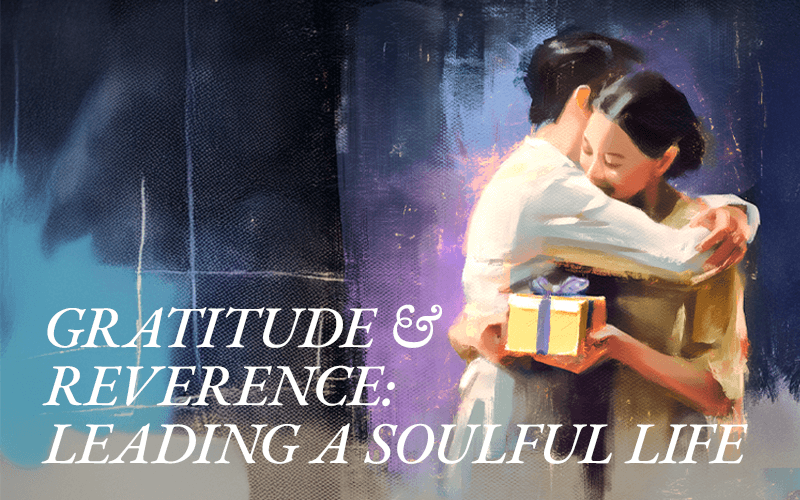
Gratitude tells you something about the relationship between everyday consciousness and a deeper organizing center that Jung called the Self. The “ego” is your ordinary sense of “I” the part that plans, worries, takes credit, and feels blamed. The Self refers to a larger pattern in Psyche that includes unconscious processes, symbolic images, and the sense that your life has a trajectory. Gratitude appears when the ego realizes it is not the only author of its life. You see that many good things came through other people, through chance, through events you never could have engineered. That realization softens rigid self-importance and opens space for symbolic meaning. From that attitude a benefactor may feel like an ancestor, a teacher like a carrier of a tradition, a turning point like “fate” taking an interest.
STUCK IN THE COMFORT ZONE: When Wrong Feels Right, and Right Feels Wrong
Sep 19, 2024
Understanding the tension between Ego-Syntonic vs Ego-Dystonic behaviors is essential for personal growth. Often, we cling to familiar patterns that feel comfortable (ego-syntonic), even when they increase our suffering, while the changes that can truly transform our lives feel unsettling (ego-dystonic). By embracing the discomfort of novel actions and confronting the parts of ourselves we have long rejected, we can align with our authentic Self. True growth requires us to trust the transformation process, integrating new ways of being that challenge our identity but ultimately lead to a more fulfilling and balanced life.
IDENTITY CRISIS: When Our Story Falls Apart
May 23, 2024
Narrative identity is an evolving story that individuals create to make sense of their lives. This story integrates past experiences, present realities, and future aspirations into a coherent whole. It provides a sense of continuity and purpose, helping individuals understand who they are. When this narrative is disrupted, it can lead to crisis.
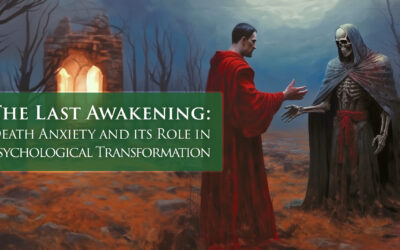
THE LAST AWAKENING: Death Anxiety and Its Role in Psychological Transformation
Feb 8, 2024
The death instinct (Thanatos) and the life instinct (Eros) symbolize the internal conflict between self-destructive urges and desires for creation, reflecting the psychological struggle with mortality. Religious traditions across the globe, from Buddhism’s focus on impermanence to Christianity’s belief in eternal life, offer diverse approaches to mitigating the fear of death, demonstrating the universal quest for peace in the face of mortality. The root of death anxiety in early childhood and the later development of defense mechanisms highlight a deep psychological battle against the awareness of death from a young age. Efforts to delay death through medical and lifestyle advancements juxtapose with spiritual teachings on accepting life’s transience, underscoring the human endeavor to navigate the reality of mortality. Psychoanalytic and existential treatments for thanatophobia emphasize the importance of acknowledging and integrating death into life for mental health.
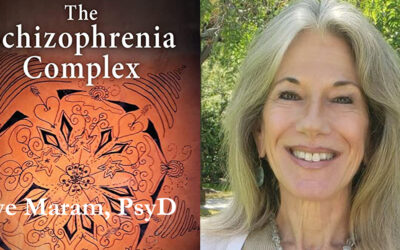
THE SCHIZOPHRENIA COMPLEX: How Do We Love Those in Chaos?
Jan 26, 2023
The submergence in the unconscious that defines schizophrenia generates negative emotions in others. Yet when we look at Jung on psychosis, he shows us that we are different from those diagnosed with it only in degree. Jung’s Word Association Test proved that the unconscious influences our daily lives, and his work with psychotic patients led to his discovery of the collective unconscious, the mythopoetic substrate of humanity.
MELANCHOLY: the exquisite ache of life
Dec 1, 2022
Melancholy evokes images of poets and artists for whom suffering and giftedness go hand in hand. Creative ability as compensation for affliction is depicted in Greek myth by the god Hephaestus. Rejected by his goddess mother and cast out of Olympus, alienated Hephaestus forged magnificent, magical objects for the gods.
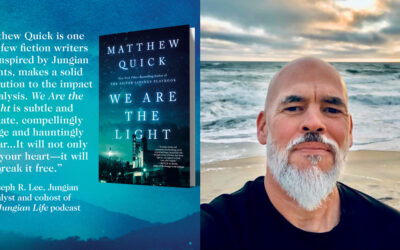
Matthew Quick on Jung, heartbreak, and healing in his new novel We Are the Light.
Nov 3, 2022
Matthew Quick, author of The Silver Linings Playbook, shares himself and his new book, We Are the Light. Writer’s block led Quick to This Jungian Life podcast, analysis, and letter writing as a literary device.
OCD: The Distress of Repression
Oct 13, 2022
Obsessions are unwanted, intrusive thoughts; compulsions are unwarranted, involuntary behaviors. Though different, they often go together, for compulsions pose as protection from the imagined bad consequences of obsessions.
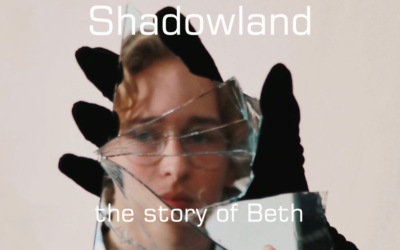
SHADOWLAND: DETRANSITION – THE STORY OF BETH
Apr 28, 2022
Beth underwent gender transition from natal female to trans male and has since de-transitioned.
SPLITTING: Understanding What Divides Us
Aug 19, 2021
We seem hard-wired to split the world into polarities: right/wrong, either/or, victory/defeat, Democrat/Republican. Infants and toddlers have not yet achieved the developmental capacity for complexity; they are believed to split their feelings toward caretakers into “good” and “bad,” depending on whether their needs are being met in the moment.
WHEN DESPAIR PREVAILES: facing suicidal darkness
Oct 22, 2020
Facing suicidal thoughts can bring the potential for new life, but when death occurs bereavement can be especially painful for families and friends.
NEUROSIS: befriending our broken places
Oct 8, 2020
Jung says neurosis “must be understood, ultimately, as the suffering of a soul which has not discovered its meaning.” The purpose of neurosis is to help us discover our purpose.