pixel
Core Jungian Concepts
REALITY AS MEDICINE

REALITY AS MEDICINE

The nature of reality may be a complex philosophical question, but from a psychological viewpoint, reality is largely a question of adaptation to the truths of our inner and outer worlds. How well do we manage psychic life and the electric bill? Science fiction writer Philip Dick pithily states: “Reality is that which, when you stop believing in it, doesn’t go away.” Multiple realities challenge us. We live in shared social realities, from embracing niceties to being steeped in beliefs and a need to belong. We also may access the objective realities of verifiable facts and scientific data. And we experience subjective realities of emotion, intuition, and unconscious influences. We can feel our feelings, differentiate between levels of reality, and choose which to apply to a particular situation or decision. Unclouded acceptance of reality is medicinal.

Jonah & the Whale: a dream for our time

Jonah & the Whale: a dream for our time

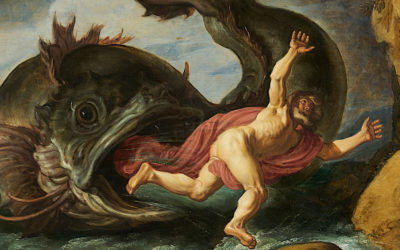
Bible establishes norms for daily life and organizes psychic life forces. For Jung, mythologies and religions are symbolic expressions of archetypal patterns that foster the development of consciousness. Mythology reveals the dreams of a culture just as dreams bring personal mythology to light. Jung said, “We must read the Bible or we shall not understand psychology.” The Bible is not psychological only, but unless it is also psychological, we may not be able to relate its contents to our personal lives. We, therefore, engage the mythos of Jonah and his whale of a tale a dream. Orienting to Jonah as dream in the world, a dream for the world, and a dream of each of us can help us better understand ourselves in the context of a greater whole.

LIBIDO: tracking inner energy

LIBIDO: tracking inner energy

Jung understood libido as psychic energy: desire, will, interest, and passion. Libido includes instincts for fulfilling bodily appetites and engaging developmental tasks. Although energy infuses all human activity, it is not a function of ego alone; for many, a worthy goal has lacked the libido to achieve it.

The Archetype of the Crocodile

The Archetype of the Crocodile

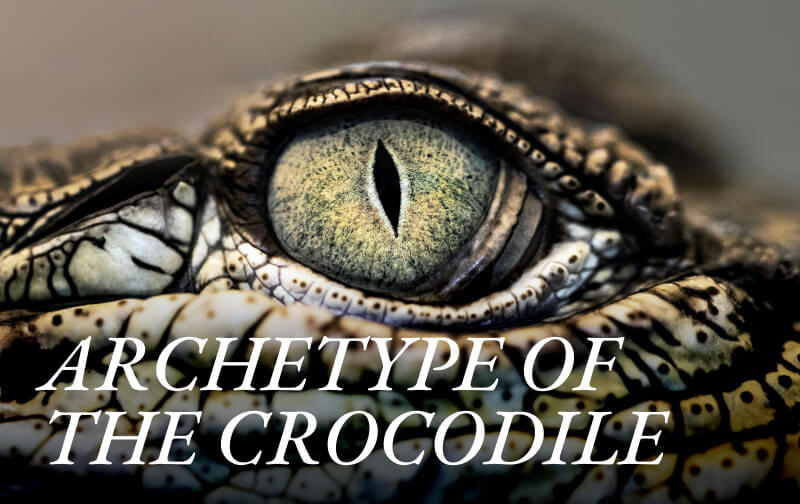
The crocodile and its alligator cousin appear regularly in dreams. Its primordial force, seemingly submerged in psyche’s ancient riverbeds, can erupt to drown, dismember and devour the ego’s claim to autonomy.

HUMANIZING THE HERO

HUMANIZING THE HERO

Mythological heroes defend, protect and quest. They range from warriors, adventurers, and saviors to magicians, loners, and rebels, but one way or another, they battle bad for the sake of good. They have courage, skill, and strength, but never a troubling moment. Although we still delight in heroes with might and shine, modern times have given rise to a new ideal: the everyday hero.

THE ARCHETYPE OF THE WITCH: Dangerous, Denied & Dishonored

THE ARCHETYPE OF THE WITCH: Dangerous, Denied & Dishonored

Like all aspects of the collective unconscious, the witch lays low when times are fine but rises when times are tense. Her archetypal power then infects humankind, inciting mass hysteria and the horrors of persecutory epidemics.

Assessing Our Psychic Inheritance: Jung and Parenting

Assessing Our Psychic Inheritance: Jung and Parenting

Jung said of the parent-child relationship: “Nothing exerts a stronger psychic effect upon the human environment, and especially upon children, than the life which the parents have not lived.” Jung understood that parents could unconsciously compel children to fulfill parental dreams or compensate for disappointments.

CONFRONTING SHADOW: The Work of Self-Discovery

CONFRONTING SHADOW: The Work of Self-Discovery

Psychotherapy is essentially the work of making shadow conscious—all that we have not discerned then disowned, or projected onto others. We seldom welcome shadow, for it is marked by emotions and motivations that deflate, disturb, and dethrone ego. From family scuffles to political hostilities and outright war, we most often meet our shadow in others. Its presence is signaled by a strong urge to take action, with feelings ranging from judgment to antagonism, from pity to self-sacrifice, and from obsession to disgust. If we have the courage to face and relate to the inner world of another, we experience and expand our own inner world. Shadow is the dark doorway to renewal and development, creativity and compassion. Jung said, “One does not become enlightened by imagining figures of light, but by making the darkness conscious.” 

SELF-REFLECTION: What Was I Thinking?

SELF-REFLECTION: What Was I Thinking?

Jung says, “There is another instinct, different from the drive to activity and so far as we know specifically human, which might be called the reflective instinct.” Self-reflection is correlated with consciousness and is arguably humankind’s unique and essential competency: a meta-cognitive capacity that is aware of its own awareness.

THE MUSIC OF METAPHOR: Healing in Therapy & Life

THE MUSIC OF METAPHOR: Healing in Therapy & Life

To understand and engage another’s internal world requires language which speaks in harmony with the unconscious. Metaphor speaks beyond ego and traverses the realms between past and present, bodily sensation and feeling, conscious and unconscious. It infuses lived experience with connection and creates shared space for healing.

SPLITTING: Understanding What Divides Us

SPLITTING: Understanding What Divides Us

We seem hard-wired to split the world into polarities: right/wrong, either/or, victory/defeat, Democrat/Republican. Infants and toddlers have not yet achieved the developmental capacity for complexity; they are believed to split their feelings toward caretakers into “good” and “bad,” depending on whether their needs are being met in the moment.