Over 25 Million Downloads
Our Podcast
Eavesdrop on Lisa, Deb, and Joseph as they engage in lively, sometimes irreverent conversations about a wide range of topics and dream analysis through the lens of depth psychology provided by Carl Jung.
Over 25 Million Downloads
Our Podcast
Top five listener favorites
Upcoming Price Increase
Thinking about joining Dream School?
The price of joining This Jungian Life Dream School will be increasing by around ten percent on March 1st, reflecting rising costs and the continued depth of what we offer inside the program. If you’ve been thinking about joining, this is a good moment to come on board at the current rate before the increase takes effect.

Spotify

Apple

YouTube

Tune In

Pandora

LETTING GO: When Is It Time?
Should we hang in and hang on – or let go? When does perseverance become pointless, or hope turn rancid in refusal to accept disappointment, defeat, or depression?

THRESHOLD: Moving Between the Realms
In medieval times, the threshold was a plank that kept barnyard “threshings” outside the house. In the sciences a threshold is the limit of magnitude or intensity that must be exceeded for a definitive change to occur. In human development life stage thresholds are marked and recognized through ritual. In psychoanalytic work the symbol is the threshold—a visible but not literal representation that calls consciousness to apprehend a larger, unseen reality.

THE UNSPOKEN WOUNDING OF MEN
Phallos, the central archetype of a man’s psyche, was once worshipped as sacred. Its urgent, dynamic, and fertilizing power was split off with the rise of ascetic monotheism and banished to the unconscious. Misplaced and maligned, it surfaces as resentful passivity, fear of passion, confusion of values, and reluctance to take action.

EXTROVERSION!
Although Jung’s theory of typology is the foundation of various personality assessments, it is important to appreciate its profundity as Jung’s theory of consciousness. The four functions of consciousness – sensation, intuition, thinking, and feeling–are governed by two attitudes, extraversion, and introversion. Jung defines extraversion as “an attitude type characterized by concentration of interest on the external object.”

The Power of NO
Fear of social rejection, workplace retaliation, or family conflict can erode our healthy no, leading to resentment, an uncertain sense of self, and inability to answer the call to life. We also need to be able to say no to our own bad habits, rigidities, and avoidance of challenges. No is robust and can open space for self-determination and authenticity. When we find our no, we also discover that yes has been waiting for us, and it is alive and inviting.

RISK & REALITY: when fear traps us
We can’t help knowing that something bad could happen if we do X…or Y…or maybe Z. Like Odysseus steering his ship between sea monsters Scylla and Charybdis, we must navigate between risk avoidance and recklessness. One keeps us out of life; the other jeopardizes wellbeing. In pre-modern times life in the external world was fraught with danger and risk; in the modern world, the consequences of risk are more often internal.

ASSESSING YOUR VALUES: meaning & motivation
There is value in examining your values, the powerful emotional and cognitive attitudes that underlie large and small life choices. Although values are initially acquired through family and institutions, an essential task of adulthood is consciously embracing traditional or individual values.

INTROVERSION: the secret value of silence
The German poet Rainer Maria Rilke expressed this idea pithily: “I am in love with you, and it’s none of your business.” Introverts are not shy, reclusive, fearful, detached, or avoidant—they simply find their inner world enlivening. Introversion places a high value on receptivity, quietude in a busy world, and relationship with oneself. Jung, himself an introvert, valued the ability to claim inner life, freedom, and independence.

TENDING THE EGO-SELF AXIS: reconnecting with source
The ego-Self axis is a concept developed by Jungian scholar Edward Edinger in his book, Ego & Archetype. It portrays the developmental relationship between the ego and the Self, Jung’s term for “the totality of the conscious and unconscious psyche [that] transcends our visions…”
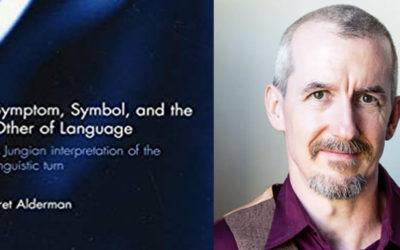
WHEN WORDS LOSE MEANING: is reality contained in language?
We are joined on the podcast by Dr. Bret Alderman, author of Symptom, Symbol, and the Other of Language: A Jungian Interpretation of the Linguistic Turn. He discusses with us the alienation and dissociation that results when we engage in a Promethean project to deconstruct language and its meaning.

THE DARK SIDE OF MOTHERING
Jung suggests that even truly harmful mothers can expiate their actions by becoming conscious of what they have done. If we can face even grievous mistakes, we can deepen into our ordinary, sometimes dark humanity. Confrontation with our negative mothering leads to experiencing emotions that were previously unrecognized or denied. We can mitigate isolation by getting help. We can be known, our experience is understandable, and we can choose the life that lies before us now. We may also discover new capacity for compassion and presence—and moments of genuine joy.

THE ALCHEMY OF WRITING
Writing is an encounter like no other with oneself and inner others, light and dark. Whether we meet the page in a personal journal or as professional necessity, we discover that ego alone does not do this job. Some days words leap like dolphins; other days find us becalmed on a flat sea. To create through writing is to encounter self and depths, and Lisa shares experiences of writing her forthcoming book, Motherhood: Facing and Finding Yourself. Her words for the creative and challenging process of mothering map a path to soul and greater wholeness.