Over 25 Million Downloads
Our Podcast
Eavesdrop on Lisa, Deb, and Joseph as they engage in lively, sometimes irreverent conversations about a wide range of topics and dream analysis through the lens of depth psychology provided by Carl Jung.
Over 25 Million Downloads
Our Podcast
Top five listener favorites
Upcoming Price Increase
Thinking about joining Dream School?
The price of joining This Jungian Life Dream School will be increasing by around ten percent on March 1st, reflecting rising costs and the continued depth of what we offer inside the program. If you’ve been thinking about joining, this is a good moment to come on board at the current rate before the increase takes effect.

Spotify

Apple

YouTube

Tune In

Pandora

AMOR FATI: Love of One’s Fate
In Greek mythology, three Fates represented life forces beyond our control. One spun the thread of life, another determined its length, and the third cut it. Jung, however, understood that fate was also the external expression of an internal situation that had not been made conscious. In other words, we may unconsciously participate in creating our own misfortune and call it bad luck, injustice—or fate. How we orient ourselves to what happens to us is crucial, and working toward self-awareness helps us find a path between feeling powerless and seeking control. Ultimately, however, we are called to embrace life as it is, not as we wish it to be. This means moving beyond ego-consciousness to discover the inner center Jung called the Self. If we know we are part of something larger, we can accept our authentic nature, say yes to life in the face of uncompromising reality, and love our fate.
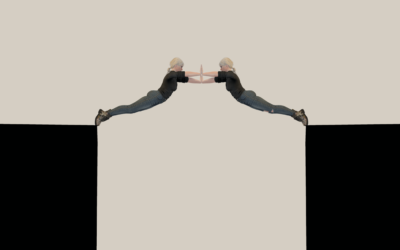
TRUST: The Bedrock of Relationship
Intimate attachments, workplace effectiveness, and stable social systems depend on our ability to rely on one another. Trust is the foundation of social exchanges and benefits, from affection to achievements. Erik Erikson mapped stages of human psychosocial development and found that establishing basic trust in the first 18 months of life was formative for later life.
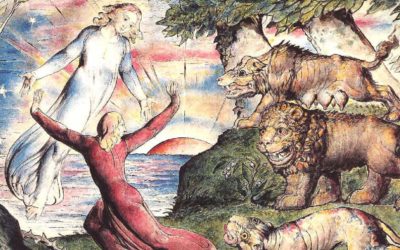
FORGIVENESS OR FURY: Finding a Way Forward
Forgiveness has long been the province of morality, virtue, and religious values. Psychologically, forgiveness requires the capacity to hold both the magnitude of the injury and the humanity of the injurer. There are doable steps toward this goal, beginning with acknowledging and mourning the wrong yet forgoing retaliation. Righteousness and anger provide only illusory power and can be chronic and corrosive.

DUPED: What Makes Us Gullible?
Jung says, “The more one turns to the light, the greater the shadow behind one’s back.” Unacknowledged shadow can increase vulnerability to coercive dealings and regrettable decisions. We may find ourselves scammed, ripped off, and left holding the bag. Why didn’t we see it coming? Mostly because our denied fears and desires create blind spots others manipulate. Advertisers, hucksters, and con men prey on our fear of danger and disapproval and our quest for security and status. Gullibility is marked by misplaced trust and willful witlessness. We may not pause to reflect, research a decision, or seek neutral counsel. It is often relieving to trust an external authority rather than bear the anxiety and responsibility of choosing. When we fail to see our own shadow, we may be unable to recognize it in others.

REALITY AS MEDICINE
The nature of reality may be a complex philosophical question, but from a psychological viewpoint, reality is largely a question of adaptation to the truths of our inner and outer worlds. How well do we manage psychic life and the electric bill? Science fiction writer Philip Dick pithily states: “Reality is that which, when you stop believing in it, doesn’t go away.” Multiple realities challenge us. We live in shared social realities, from embracing niceties to being steeped in beliefs and a need to belong. We also may access the objective realities of verifiable facts and scientific data. And we experience subjective realities of emotion, intuition, and unconscious influences. We can feel our feelings, differentiate between levels of reality, and choose which to apply to a particular situation or decision. Unclouded acceptance of reality is medicinal.

CONTAGION: Pollution, Protection & Purity
When the archetype of purity is activated, science and psychology intersect. Fear of contamination has deep instinctual roots, evidenced in universal facial expressions of distress and disgust.

PORN: Technology, Consumerism & Soul
Nearly every civilization since ancient times has portrayed explicit sexual acts. Sexuality’s numinous aspect has long brought it into close association with spirituality and religion. The powerful potential of sexual arousal is central to being human and has seized today’s collective via the Internet. Porn is symbolic of the widespread merchandising of desire, from toys to trucks. The unprecedented power of image in today’s world can now drive what Lost Goddesses author Giorgio Tricarico terms our “desiring multiplicities” and quest for limitlessness. Pornography can be addicting, and Jung maintained that “There is no illness that is not at the same time an unsuccessful attempt at a cure.” Pornography could also be an attempt to achieve a sense of integration and wholeness through reconnection with the archetype of the goddess.
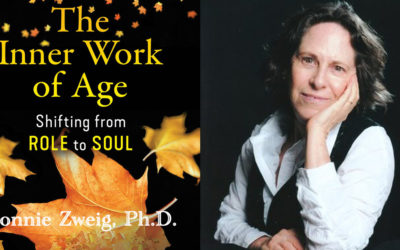
The Inner Work of Age: Shifting from Role to Soul
Dr. Connie Zweig, Ph.D., retired Jungian-psychotherapist and author, joins us to discuss her new book, The Inner Work of Age. She extends her well-known work on shadow into midlife and beyond and provides a map for uncovering obstacles to aging consciously. The transition from Hero to Elder, or role to soul, begins with releasing the ego’s identification with doing and reorienting toward the transpersonal center that Jung called the Self.

LEGACY: living toward the long future
Is the future relevant? Can we suspend immediate satisfaction in favor of our descendants’ quality of life? Legacy comes from the Latin root legatia: one who is sent on a mission [into the future]. It is an act of benevolent imagination to accompany our choices forward in time and take responsibility for their fruits – by facing the long future we have set in motion, we can choose wisely.
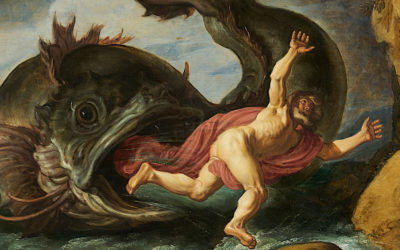
Jonah & the Whale: a dream for our time
Bible establishes norms for daily life and organizes psychic life forces. For Jung, mythologies and religions are symbolic expressions of archetypal patterns that foster the development of consciousness. Mythology reveals the dreams of a culture just as dreams bring personal mythology to light. Jung said, “We must read the Bible or we shall not understand psychology.” The Bible is not psychological only, but unless it is also psychological, we may not be able to relate its contents to our personal lives. We, therefore, engage the mythos of Jonah and his whale of a tale a dream. Orienting to Jonah as dream in the world, a dream for the world, and a dream of each of us can help us better understand ourselves in the context of a greater whole.
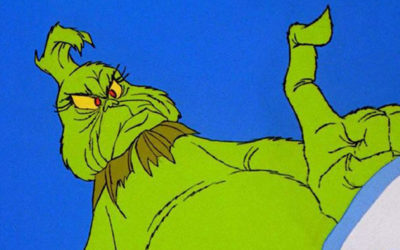
MR. GRINCH ON THE COUCH
Dr. Seuss’ case history of the Grinch presents him as “uncheerful, unhealthy, unclean.” We hope that adding an analytic perspective will be helpful in understanding this clinical condition.

LIBIDO: tracking inner energy
Jung understood libido as psychic energy: desire, will, interest, and passion. Libido includes instincts for fulfilling bodily appetites and engaging developmental tasks. Although energy infuses all human activity, it is not a function of ego alone; for many, a worthy goal has lacked the libido to achieve it.