VIDEO https://www.youtube.com/watch?v=lOlApKV-wnw Art...


VIDEO https://www.youtube.com/watch?v=lOlApKV-wnw Art...

Defense mechanisms function as unconscious psychological strategies we deploy to navigate reality and sustain a consistent self-image. They act as a shield, guarding against feelings of anxiety, shame, and vulnerability. They are feeling states that prompt us to avoid contact and trick us into thinking they protect us against emotional harm.
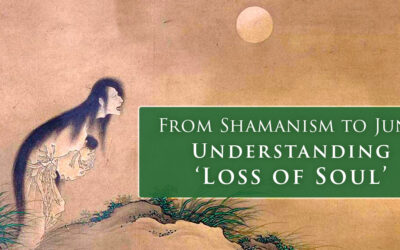
“Loss of soul amounts to a tearing loose of part of one’s nature; it is the disappearance and emancipation of a complex, which thereupon becomes a tyrannical usurper of consciousness, oppressing the whole man. It throws him off course and drives him to actions whose blind one-sidedness inevitably leads to self-destruction.”
CG Jung CW6, para 384
To reimagine that we are part of a responsive web of life, is to resist the mechanistic worldview that treats nature as a lifeless object to be controlled and exploited. It reawakens a parallel universe where our material actions simultaneously appear in our inner world, not as photographs of our acts but as symbols that reveal the secret relationship between ourselves and those we influence.
If we envision archetypes as cosmic blueprints, then archetypal images are the tangible expressions that emerge from this transcendental plan. They are the houses built upon the foundation of archetypes, manifesting in a multitude of forms while remaining interconnected through their shared universal design. Separating archetypes and their imagery clarifies how one gives rise to the other yet remains distinct.

Tests are a fundamental part of the human experience, marking our rites of passage and shaping our journey toward personal growth and transformation. The word test originally referred to an earthenware vessel in which metals were smelted to separate ore from dross. Like ancient vessels holding the heat of the refining fire, our task is to contain the tension of the test. Tests smelt fantasy from the ore of reality and force us to adapt.

Despite volumes written on morality and ethics, how do we determine what’s right? Values distilled over time by family, faith, and nation define and denounce wrong, but the effort to banish shadow only allows it to emerge as projection onto others.
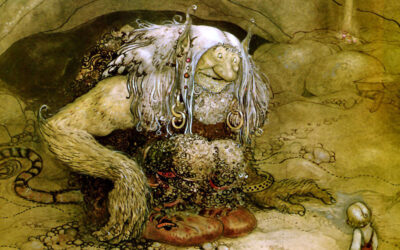
Our inferior function lies closest to the unconscious. It tends to manifest through tasks, people, and situations that throw us off balance.
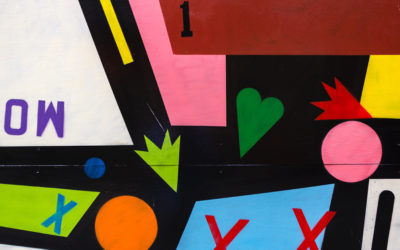
Compartmentalization is like a home electrical panel that separates power into different zones. It allows us to separate the charge carried by ideas, feelings, and actions without risking system overload.
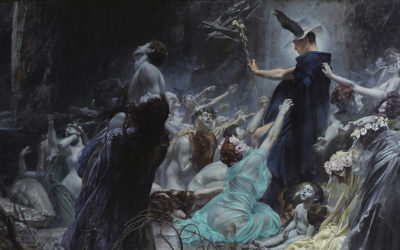
Hermes is the symbol of a living reality seeking conscious acknowledgment, the agent of creativity and transformation. How we perceive his message is not his interest. He is already gone.

Photo Credit: Matthew Paul Catalano via Unsplash...
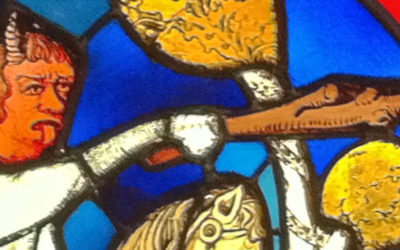
A fiendish inner spirit can prompt behavior that defies self-interest and even common sense. In Edgar Allan Poe’s story, the protagonist acts on his diabolical urge to commit murder, followed by a self-destructive urge to confess it.